Popular Posts

Saturday, April 30, 2011

Pomp, under the Circumstances

There seem to be two basic views about the Royal Wedding (now why did I capitalize that?).

1. Relax and enjoy the fairy tale (royalty, Englishness, empire, national unity, the promise of social mobility for commoners like Kate)! Times have been tough--let's party!

2. How can we afford this when we can't afford education, health care, job training, public transport, etc., etc.? Roll on the Republic!

The first counsels brief happiness at the expense of engagement with truth of things as they are; the second counsels righteous anger at the expense of a good knees up which everyone clearly seems to need.

Princess Beatrice obligingly came dressed as a Yak. Or a Georgian architectural folly--I'm not entirely sure.

I see both points, I really do, though I have always been a staunch republican (not the GOP, you understand). I also like a bit of fantastical escapism, me.

But I'm getting old, and the echoes of Cassandra-like warnings from the recent past about the present we now live in were brought back to me by the whole affair.

I used to teach English Lit. and an interesting task was always to get students to compare the twin pillars of 20th century dystopian novels--Orwell's 1984, and Huxley's Brave New World. Both were written mid-last-century. Both predict a politico-social order to come (about now, actually). Both predict a dystopia in which individuals will lose what is taken to be their humanity--their emotions, uniqueness, will, inner life.

BUT--in Orwell's book, social control is achieved by force and coercion--what the Frankfurt school philosophers call RSA's (Repressive State Apparatuses). A security state using violence, torture, informants. To a degree, and in some places more than others, this has come true. Ask a Syrian.

Thankfully, this didn't come to pass for us. Or did it?

However I think it is Huxley's opus that gets it right for the Anglosphere--Britain, America, Australia, etc. In this book, control is achieved by narcotics, elaborate diversions, sensuality (or its promise), in short by escape from a reality in which the individual person is effectively powerless to do anything other than indulge and distract him/herself. Plus the ideologies at work in the public sphere that make these practices seem normal, natural, and right.

This one did come true.
A bottle of cheap  Prosecco, a fantasy on a flat screen (on credit), a public holiday, and cake--is all we need to carry on for a while longer in a country that is over-crowded, bankrupt, and paradoxically increasingly squalid and hideously expensive for the overwhelming majority of its 'subjects' (I use the word advisedly).

'Soma' was the name Huxley gave to the cheap, easily acquired narcotic that kept the helpless souls of his dystopian idyll happy and complaint.

"There's always soma to calm your anger, to reconcile you to your enemies, to make you patient and long-suffering. In the past you could only accomplish these things by making a great effort and after years of hard moral training. Now, you swallow two or three half-gramme tablets, and there you are. Anybody can be virtuous now. You can carry at least half your morality about in a bottle. Christianity without tears-that's what soma is."


- Aldous Huxley, Brave New World, Ch. 17

Soma...somnolent...somnolence....all drawn from the same root word meaning sleep......zzzzzzzzzz.
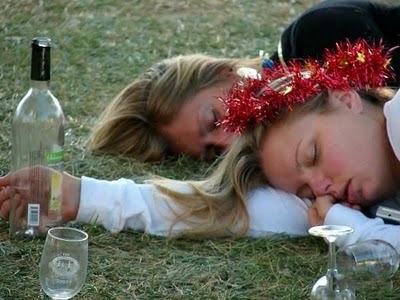
"Whassat Kate Middleton goth that I aint got...?"

Go back to bed, Britain. Your nation is great and splendorous again.

Go back to sleep, Britain. We are one happy nation in the sun, building the new Jerusalem, a shining model for the world.

Go back to sleep, Britain and let nothing wake you from pleasant Blytonesque dreams of picnics and lashings of cream.

Meanwhile, libraries shut. Home care services are cut. NHS officials are finding ways not to treat people to keep costs down. And a railway ticket between major cities costs a week's wage.

First slum of Europe: a role
It won't be hard to win,
With a cast of crooks and tarts*. (*Author's note: take a good look at the guest list)

And that will be England gone,
The shadows, the meadows, the lanes,
The guildhalls, the carved choirs.

There'll be books; it will linger on
In galleries; but all that remains
For us will be concrete and tyres.
--Philip Larkin: "Going, going"


So why not open the Prosecco, look adoringly on the Lords and Ladies, and dream again of the past? I can think of no reason why not.


"God bless us...every one."

Monday, April 18, 2011

Theatre of the Absurd: How Terror Wins

"They that can give up essential liberty to obtain a little temporary safety
deserve neither liberty nor safety."  --Benjamin Franklin

Call me old-fashioned, but I think an essential liberty worth defending is the liberty not to have our under-aged children extensively groped by some anonymous hired goon in a uniform.

A reasonable assertion, surely, yet this is a freedom we apparently no longer have. Witness:


If you were the parent, the grinding indignity of watching this forced upon you, what would YOU do? 

It took me about a nano-second to realize that, had my very beautiful 14-year-old daughter been in this little girl's shoes, I would now be sitting in jail on multiple security and assault-related charges. Why? 'Cause I'd have broken their arms. Which is why THESE parents are way smarter than I: they filmed it in all it's stark, damning Auschwitz-ness.

I do not think I overstate. The guard is an ordinary person "just following orders/procedures", very professionally. Anyone with an ounce of sense knows that the child poses no actual threat to the Reich. The helplessness of the parents having to witness their innocent offspring being man-handled by the state is a key part of the control mechanism: "If we can do this to kids (and we can, see?), imagine what we can do to YOU if we feel like it." A non-consensual violation of a child's body--something that would meet with the harshest penalties and the sternest social disapproval in ANY other circumstances--is allowed to pass as normal, necessary and right, as banal as ticking a box. It's that banality, the casualness of the cruelty, that is for me the most crazy-making aspect of this. "It's all in the interest of the greater good, so what are the parents so upset about?

"When they came for the 6-year olds, I said nothing because I was not a 6-year-old."

Nothing new to see here, citizens. Move along.

And let's be clear: transport security is largely theatre, creating the feeling of improved security without the reality. Oft-quoted stats from the absolute height of security paranoia in the six months immediately following 9/11 indicate that the following passed through un-detected:
  • 70% of knives
  • 30% of guns
  • 60% of fake bombs
But they never fail to notice your damned water-bottle. Nice work, team. Bet you sleep like babies at night.

And do remember that the 9/11 hijackers initiated all this mayhem with box-cutters.

Conclusion: That's right, your kids being clumsily groped buys not one iota of safety. So the humiliation, loss of liberty, and probable psychic damage of a child were for nothing.

My old pal, writer and wit Dave Belz says:

"I've got a clean driving record, no criminal convictions, a stable job and a permanent residence in the U.S. I should be able to have a sticker on my driver's license or passport that says: "OK to Fly." Talk about where we could cut spending..."

Anyone capable of irony is probably NOT the dude you're looking for.

Similarly, 6 year old American kids are so unlikely to be hiding bombs in their pants (watch the video if you haven't already and if you can stand it), that the CERTAIN damage to people, to simple justice, to human rights, and to common sense certainly outweighs the POTENTIAL threat.

What strikes me as particularly absurd about all this, is that the defenders of post-Patriot Act security are usually the same people cozily assured of  heaven and their place in it. Those who croon sentimentally about death--"Don't worry, honey, Nana's gone to a better place."

Strange, is it not? If the after-life really is better than this veil of tears, if there's pie in the sky when we die, if it's all in God's hands anyway, why the paranoia over being killed by some vicious evil-doer? At least it'll be quick. But no one who ever thought carefully about their theology embraced an injustice in the name of something so provisional.

Quick is, I fear, NOT what will be this child's recovery time. Nor will be quickly relieved the parents' sense of impotence at the bizarre injustice of a 'freedom-loving' country.

By such small increments does hard-won, man-made freedom die.

Monday, April 11, 2011

Incognito

I have an uneasy feeling that France's burqa/niqab ban won't end well.

From today, it is illegal to wear one in public. To leave your home while wearing one is an intention, therefore, to commit a crime. Police will not have the power to remove it, nor will they insist that it be removed by the wearer. They will simply ask the wearer to accompany them to the station. Creepy, I say.
For those who don't know the variations on the theme.
The rationale for this has nothing to do with race or religion, we are told. It is simply a matter of security--people should not be allowed to hide their faces in public. Likewise, it will be illegal to wear a balaklava in pulbic, which will be a blow to skiers on the pistes of the Valle d'Ser (sp?).

Implications for street mimes, people on their way to fancy dress parties, commedia dell'arte troupes, Zorro and Batman impersonators, and the like, are still being worked out.


Clearly a security risk
In short, everyone wearing anything which masks their normal visage will be assumed to be going about incognito--lying about who they are, in effect. I mean, what good will the profusion of security cameras do if your physiognomy can't be captured and scanned and archived? How will the surveillance society we have become over the past 15 years or so function properly?
(Which begs the question: when did my right to ponce about like the Lone Ranger get eclipsed by national security imperatives? Not that I do...)

The Preach-for-Food solution: better latex-based masks. Any actor knows about the wonderful efficacy of foam latex to produce life-like flesh and facial features totally unlike our own, Mission Impossible style. If the problem is that the burqa/niqab prevents a view of a woman's face and hair, a view which would otherwise drive men wild with unrestrainable lust, simply ugly up, thus:
If, on the other, hand the mask on the right also drives you wild with lust, you may need to seek professional help.

But I jest and I digress.... A story from life, 'cause you couldn't make it up:

As many of you know, I live in a predominantly Islamic part of Manchester, the "Curry Mile" as it's called. The other day I was standing in a queue with a small group of Muslim women, dressed in full, black burqas. My sense was that they were related, as there was a small squad of kids running around between them, playing, seeming to know each other well. One very little muslim girl, shy at first, was clinging to her mother in all this mayhem, and gradually joined in the running around.

The Curry Mile: The Lahore of the North.
The queue advanced and the positions of these identically-clad women shifted. When the little girl had had enough larking about, she went back to look for her mother--and I watched as she stood there genuinely confused for a moment about who to run back to. She ran up to one woman and hugged her legs, and was gently corrected that, no, she was not her mother The woman who was her mother spoke up, and the girl ran back to her hug her legs, relieved.
A Muslim man and I had watched this exchange, and he smiled at me as if to say--"happens all the time in our world".

And in that moment  I kind of got how stupid and reactionary the burqa ban is--what the hell do I know about the complex and subtle daily negotiations around the burqa such folks go through every day? How do I know, for example, the sexual politics around it--that the woman under the burqa is actually being coerced into wearing it. How do I know that it is not a conscious choice which has costs and inconveniences she's prepared to deal with?

Come to that, living on the curry mile, I've felt a lot more threatened by the EDL thugs that roam the Muslim quarter looking for trouble,  than by any of the demure, polite, courteous muslim men and women I meet every day.

Security risk? Anyone can hide anything anywhere, if they want too bad enough. I mean, people sneak knives into jails, and in jail they look in your a**. As a security measure, the burqa ban, therefore, is a blunt instrument, and cannot in itself prevent a single terrorist act.

What it WILL do is further polarise an already intolerant social order, quietly demonise muslims, and perhaps prop up the fortunes of an unpopular President de la Republique, by taking support away from the far right Le Pen goons. It is populist fear-mongering travelling incognito.

How many Muslims do you think he included in his focus-group discussions?
While it targets the deeply held beliefs of a particular culture, last thing this is about is religion.

Friday, April 1, 2011

Gag Reflex

Why is some of the best stand-up material about religion?


Not a widely-recognised likeness.
 If you don't accept the premise of the question, do yourself a big favour: get a box of Kleenex (for the tears, sicko) and do a Youtube search, inserting any of the following comedian's names into the search phrase "...on religion":

Bill Hicks
Dave Allen
Billy Connolly
Doug Stanhope
Bill Maher
Lewis Black
George Carlin

Then point, click, and brace yourself.

This is a quick grab-bag, largely to do with my own tastes, but you can always think of your favorite stand-up, search him/her and the odds are good there'll be material on God, the Bible, religious traditions, etc.

Nor is this phenomenon historically new (cf. Aristophenes and Chaucer), although this strain of humour did go 'underground' during the bad old days when a non-pious crack could get you flayed, burned, disemboweled, quartered, hung, and tossed in a pond (just to make sure of the job).

So, if religion has always been a laughing matter, even if sniggered quietly about in secret amongst the lower orders, did one urge pre-date the other? That is, which came first, the joke or the prayer? Did sentient hominids have humour before heavenly thoughts?

A widely-recognised likeness.

Or, as seems more likely to me, did the two grow up together, sort of the conjoined twins of the human psyche?

Why does this seem an urgent question to me? Well, let me, er...confess that I find my pulpit style moving from "Speaching" to  "Preaching"; that is, I find myself drawing more and more on the genre of stand-up than on the dry academic lecture or earnest Victorian-style improving public address. In fact, I would go so far as to suggest that good preaching and stand-up share certain frontiers--present-tense audience engagement, a sense of danger in uncomfortable truth-telling, and a liberating catharsis.

Could be this is just me, as I have always had a 'gag reflex'--possessed of a mind that finds the quickest route to a quip. This might just mean, of course, that I'm not really cut out for the work as it's practiced.

It's not that most of us in the pulpit make no attempt at humour, it's just that that humour is also usually lame. Like your 10th grade math teacher's idiotic daily puns and safe, stock gags he's been laying out for years.  Wry, dry, professorial...no, no, no what I want is the laughter that leaves you helpless, your mind blown by truth that SO needed saying, your soul cleared of the s*** that banks up in the course of living in this broken world.

Laughter has long and widely been known to be intensely therapeutic; so why oh why are the no jokes in the Bible (or the Qu'ran, come to that)? What will we laugh about in heaven? Will there even BE laughter at all, since all absurdity will have been resolved? I shudder at an eternity without big fat laughs.


You'll go blind looking for a laugh in here.
 Unless God's idea of a joke is Job or Isaac ("Bwahaha...just kidding!...'smatter can't you take a JOKE?"). Perhaps because his audience was a pre-literate desert tribe, armed with little more than pointy rocks and just ten evolutionary hairs short of a clan of orang-utans?

Jesus, too, seems particularly (nay deliberately) humourless. But as an genuine iconoclast, he was well-placed to mock the falsely pious pretensions and the systems of authority he was passionately over-turning. It's a situation and an audience ripe for comedy. Some of the comics listed above are noted for their messianic quality.

My theory is that the Bible is probably FULL of humour, but like most humour, it has not survived translation. Ancient Hebrew or Aramaic to Greek, Greek to Latin, Latin to 500-year-old English, 500-year-old English (which regularly uses the long-defunct subjunctive tense) to whatever it is we are speaking and thinking in today.

Watch a sub-titled comedy from, say, Finland, if you don't agree. Even if SOME humour makes it through (and modern Finnish is linguistically VASTLY different English, it's almost like Vulcan), it clearly does not make the same sense to you as it does to the Finn.

Despite cultural and linguistic and historical differences, we ALL have a gag reflex, though the triggers for it may vary. But not the guide-for-living-holier-than-thou core texts, oh no, missus. Matters too serious for anything as coarse as a guffaw.

A mission, if I choose to accept it: making the practice of worship a safe place for healing, cleansing, full-bellied laughter? NOT at the expense of others, though some of my favorite targets are fundamentalists and Catholics. And that's just not good enough for a confirmed pluralist, which I claim is the essence of the Unitarian ethos.

But I want people to leave the church service--not always, but not never-- feeling as good as I saw a large, mixed audience of all ages last night leave the Frog and Bucket comedy club, far and away the best such establishment in the northwest. Cheap ethnographic ministerial field work it was, too--5 comics for 6 quid plus the cost of a carefully-nursed pint of Murphy's.

A mere 'widow's mite' for a glimpse, however brief, of the Kingdom of Heaven where all is truth, and light, and laughter.

(Speaking of messianic comedy, enjoy this video of the late lamented Bill Hicks, doing the best preaching you'll never see in church.)


It's just a ride...all that's missing from the end of his set is an 'amen.'

Monday, March 21, 2011

The Little Chapel That Cried

"I wonder who will be the last, the very last, to seek this place for what it was."
--Phillip Larkin, 'Church Going'

Ladies and gentlemen, allow me to introduce you to Platt Fields Unitarian Chapel.

I call it "The Little Chapel That Cried".

Derelict, it stands across Wilmslow Road from the college where I am doing my ministerial training. It was built in 1702, and held Unitarian services until 1972. After that, until as recently as three years ago, it was home to the Manchester Amateur Photographic Society.

Now it's for sale, a snip at a mere 350,000 quid. "That's for nothing," says Eddie, the current owner. I met him last time I wandered by. He tried to sell it to me, complete with the attendant graveyard, holding all that was mortal of several Lord Mayors of Manchester as part of the bargain.

Every time I have to do my shopping at the local Sainsbury's for the past six months, I've walked past this gently crumbling reminder of the arc of history I find myself in. I've been reading the book The Death of Christian Britain by the social historian Callum Brown. The statistics he marshalls cover about the same time frame through which this little chapel has travelled, and the numbers point to the same inescapable conclusions the chapel bodies so palpably: mutability, decline, and transformation.

I have been away from the UK twelve years. This doesn't quite make me Rip McWinkle, but at today's accelerated rate, it's been long enough to see things are heading south here. It's not just the economy, the "Broken Britain" malaise...it seems generally accepted that its best days are behind it, if for no other reason than the PM ("CallMeDave" Cameron) insists the opposite is true. (A thing is true when a coalition government vigorously denies it, is my motto...).

You already sort of know the story: post-world-war disillusionment, the rise of consumerism, the advance of scientific knowledge producing an increased sense of human sufficiency, greater social mobility and freedom. The pros and cons of all these are debatable of course, but together, their inertia has created a sense of inexorable undertow, like the pull of the sea.

An indication of this is that vast majority of the cultural industries here are turning out antiquarian and history-based material--game shows, tv drama, films, reality programming, documentaries--our own little Hellenistic period. Feeling there is no future, we lose ourselves in dreams of the past, which are always rosier dreamt of than actually lived through. Don't get me wrong, I like nothing better than costume drama, but I thank my lucky stars I live in a world of anti-biotics and anaesthetics, and that my daughters aren't condemned to servility in marriage or developing rickets from 12-hour-day factory shifts.

Our denomination, for all its uniqueness and progressive foresight, has not been immune to this tidal pull, its glory days having reached their height just before WW1, a mere century ago. Once, the Unitarians boasted a social impact massively disproportionate to its numbers, counting as it did some of the empire's best and brightest amongst its adherents. But today, the heritage-listed buildings we joyously threw up in our heyday are like financial millstones, as the damp sets in, gravity and erosion work their patient transfiguration, the famished packs of vandals steal the copper-piping and the lead from the roofs, anything, in fact, from which the most meager profit can be wrung--even if only as firewood for a cold night. With declining numbers (our statistical truth), there is less and less we can do about this. It's a jungle out there, and the chapel has been gnawed at by scavengers over the past 30 years.

But Eddie, my Virgil in this dark netherworld, tells me there's hope, of a kind.

He's pleasant enough, bluff, chatty, and sharp, and wants me to know (having discerned my accent) that he loves the states and has been to Graceland several times. And like a true Elvis man, there is no irony when he tells me he looks at The Little Chapel That Cried and sees not decline, but opportunity.

The chapel sits next to a large public park, and he takes me out the back and, with his arms waving, sketches in the air his vision of the restaurant the place could become, with an imaginary back deck area, sweeping across and above the gravestones, to take in the full view of the green fields beyond the hedge-rows. "The sun sets right behind those trees,' he swoons. "Glass of wine. Lovely."

And just like the vandals, Eddie looks at this place where centuries of Mancunians were hatched, matched, and dispatched, where generations of free-thinkers revelled in the worship of mighty forces, where thousands of human souls' depths were plumbed--and sees not history, but money. The principle is the same whether you're a junkie looking for a pew to chop up for warmth or a property developer trying to ramp your margins: acquire, asset-strip, profit, move on.

He senses I may not be interested in buying a picked-over antiquarian shell, so tempts me further. He tells me that the Manchester Police department have set aside a 100,000 pound grant for anyone who buys this site with an eye to developing it. This makes sense, I concede to him. A derelict building, even on a main road, is an invitation to criminality.

"Oh, it's not just to save the building. The 100 thousand quid is for anyone wanting to turn this into a licensed rave venue. Keeps the kids where you can keep an eye on them. Police reckon it's money well-spent."

And so from one kind of (ahem) ecstasy to another, this little chapel will transform. Religion to rave. From the ringing of the bell that called the faithful to new music ringing out. Plus ca change?

If I were a better writer, I would compose a dapper little elegy on the ironies of fate, like the Hellenistic poets, who also sensed their ancient gods being co-opted by the uber-slick Romans, and transmogrified into a strange new service.

Maybe later. Right now I want to run...

So I take my leave of Eddie, who presses a business card into my hand. On the back of it, scrawled in ball-point, it reads: "Swinton Police Station", the name of a P.C. and gives a phone number. He claps me on the back and starts to croon in Elvis baritone "Glory, glory hallelujah..."

What is going on here? Police approved raves, white-van-driving property developers, vandalised chapels, gravestones...

As I look back at the chapel shrinking into distance, the lines from the Larkin poem, cited above, rang in my ears:

For, though I've no idea
What this accoutred frowsty barn is worth,
It pleases me to stand in silence here;

A serious house on serious earth it is,
In whose blent air all our compulsions meet,
Are recognized, and robed as destinies.
And that much never can be obsolete,
Since someone will forever be surprising
A hunger in himself to be more serious,
And gravitating with it to this ground,
Which, he once heard, was proper to grow wise in,
If only that so many dead lie round.

For some reason, all our compulsions have met in this little spot, then as now. The chapel is a screen upon which we continue to project whatever it is our compulsions are, and thus says more about us than about it.

And I note that, as I move far enough away to cover the chapel with my hand, there's one thing no one's managed to strip and sell. Look in the belfry in the photo above, and you can just about see it.

Yes: it's the 17th century bronze bell, silent now and for a long time. Too hard for easy pickings.

Suddenly, I want to pick up a rock and ring it, hard and loud and unendingly.


Tuesday, March 15, 2011

To the mysterious phantom readers...

Dear reader(s) in:

Denmark
India
Nigeria
Spain
Portugal
Russia
Poland
Turkey
Canada
Argentina
et cetera,

Blogger's stats function tells me you're out there. Common sense tells me you read English well enough to surf English-language sites.

Why not become a follower (not my ideal choice of words) of the blog?

You could then tell us about yourself. We might get to know each other, share ideas, have a conversation, even.

For instance, I am surprised that my most-read entry "Govinda and the Heartbreak of the Bentley", a piece I wrote rather quickly and without the usual agonising self-relfection. Why is this so? Anyone?

It used to be thought that the inter-tubes were a revolutionary means of creating communities of shared interests that transcended the tyranny of distance, made the world smaller, helped us all feel a bit less alone. I say "used to be thought" because it's since become co-opted by capitalism, and now is mostly a new way to collect marketing data.

The few unobtrusive ads I attach have so far netted me $0.00. Message: I ain't doing this for the money.

Marketing isn't what this is about. You have to click on an advert to attract the attention of marketers, so there's no chance of cookies or viruses or anything else infecting your hard-drive, unless you take that fateful step. So don't click on them.

Becoming a follower just means we can talk and get to know one another. No traps, no gimmicks, just (virtual) human contact. I've even adjusted the settings so that ANYONE can post without even being a follower (I still retain editorial control, of course).

So why not post?

Don't lurk: talk.

Don't just see something; say something.

Be a 'with-ness', not a witness.

I know you're out there...

Thursday, March 10, 2011

An Island of Time

For years I've dreamed that one day I could get myself into a position to do nothing but read, reflect, and write. That one day I'd manage to slough off, just for a year or two, the endless rounds of work and getting and spending and the thousands of distractions that conspire to yank you out of purposefully exploring an inner life. I thought if I could manage that somehow, all the stuff I've done and all the roles I've played (on stage and off) over decades of workaday life would somehow coalesce and resolve into something like an integrated self. And once coalesced, like the colours of the rainbow, it might become a white light to see more clearly with.

Somehow (and it took some doing), I have actually managed carve out a little island of time, a year or two at best, before returning to a structured working life again. Those close to me know that getting here has not been easy. I chucked my good job like a bad suit of clothes, cannonballed into the lake of under-employment, and dog-paddled for 18 months doing part-time teaching, voice-overs, some preaching and some acting. Then I got on a plane, and here I am, at distance from my much-beloved wife and daughters and my good Australian friends.

To call ministry a 'late-life career change' is accurate but superficial, as it involves a bit more than learning a new skill set. An inner journey cannot be taught, but must be learned, and it rightly requires a lot of reflective time. Hence the temporary disengagement from routine, alone and reflective on this island of time.

"Sounds great; lucky sod" I hear my working friends think.

But let me tell you--I'm not so sure this was such a great idea any more.

It's not the lack of accustomed comforts, nor even the visceral ache or being apart from those you love, nor the navigation of strange new vocational waters with incomplete maps. The really big shocks and challenges are entirely existential and to do with time itself. Here are just a few that leap presently to mind :

1. You realize how prodigal you've been with the time allotted in your one, finite little human life. "Wise men grieve most for the loss of time" said John Donne. I haven't done the mental arithmetic, but I'd venture that out of 54 years on earth, I may have spent nine months of it drifting in traffic jams and slow queues. Enough time for a whole human being to gestate. I don't even want to contemplate what might turn out to be years watching tv, or doing things I've actively loathed.

2. Time moves faster than you think. Call me old-fashioned, but one of my all-time favorite plays is still Thornton Wilder's Our Town. In the final act, the deceased heroine Emily Webb, looks back at the place she spent her life and has this epiphany, which I still find moving:

"I can’t. I can’t go on. It goes so fast. We don’t have time to look at one another…I didn’t realize....Do any human beings ever realize life while they live it– every, every minute?"

To which the Stage Manager replies: "Saints and poets. They do, some."

Like stepping off one of those moving sidewalks after a long spell, your feet hit the solid earth and pwang!--your body has to catch up with itself for a split second, and you realize how fast you were travelling, and how used to it you became. No wonder most of us are tired most of the time.

As Kurt Vonnegut would say: "Where's the fire, son?"

3. Time only moves forward. Just because you (well, me) happen to have more past than future, doesn't mean you get visiting rights to what's been. Memory-soaked places in our past we call "old haunts", but it's a little misleading, because what haunts them is you. The place has moved on but you have not somehow, and swirling around and occupying and pulsing through what you thought, for a time, was yours, actually belongs to others now. The house you raised a child in is being tended and dreamed in by others. A bridge where you fell helplessly, totally in love is choked with scurrying office workers. The past becomes another country, and you don't speak its language or know its customs. The river looks the same, but you can't step into it twice and have it be the same river.

I don't pretend these are great revelations. We are already aware of them, however dimly. But the felt truth of them makes you want to plunge back into the current of the everyday and swim along with everyone else, abandoning the island of time to the splendid isolation of itself.

Or just maybe, you're able to swim with this gift of awareness in mind, more sensible of each stroke, each rippling wave, each plash of fellow-paddlers, each gull-cry above the broad and fathomless water, carrying as it does all the living and the dead, sweeping it all fast and forward into who knows what.

And maybe, just maybe, my own voyage--the only one in which I have any agency--can be directed and matter in some small but affirming way:

One ship drives East,
and another drives West,
With the self-same winds that blow;
Tis the set of the sails, and not the gales,
Which tells us the way to go.

Like the winds of the sea are the ways of fate,
As we voyage along through life;
Tis the set of the soul that decides its goal,
And not the calm or the strife.
--Ella Wheeler Wilcox

Amen.